
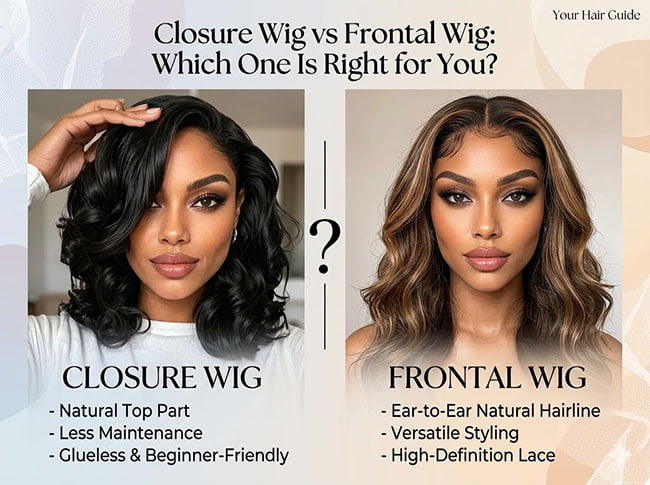
If you’re shopping for a wig and keep seeing closure wigs and frontal wigs, you’re not alone. These two lace wig types are among the most popular choices for women who want a natural-looking hairline and styling versatility—but they serve different needs.
In this guide, we’ll break down Closure Wig vs Frontal Wig, including pros, cons, styling differences, maintenance, and how to choose the best option for your lifestyle.
What Is a Closure Wig?
A closure wig typically uses a small lace piece (usually 4x4, 5x5, or 6x6 inches) placed at the crown or middle part of the wig.
Key Features:
- Limited lace area (mostly parting space only)
- Natural-looking middle or side part
- Easier to install and maintain
- Less exposure to glue or adhesive
Best For:
- Beginners
- Low-maintenance users
- Protective styling
- Daily wear wigs
Pros:
- Beginner-friendly
- More affordable
- Longer lifespan (less lace = less damage)
- Easier to install and remove
Cons:
- Limited styling versatility
- Fixed parting area
- Less natural hairline illusion compared to frontal wigs
What Is a Frontal Wig?
A frontal wig uses a lace frontal that extends from ear to ear (usually 13x4 or 13x6 inches), creating a full hairline illusion.
Key Features:
- Lace spans across the entire front hairline
- Allows multiple parting styles
- Can be styled in ponytails and updos
- More customizable look
Best For:
- Advanced wig users
- High-fashion styling
- Versatile looks (ponytails, middle/side parts)
- Events, photoshoots, and glam looks
Pros:
- Most natural-looking hairline
- Maximum styling flexibility
- Can create multiple hairstyles
- Seamless blend with skin
Cons:
- Requires more maintenance
- More expensive
- Installation takes longer
- Shorter lifespan if not properly maintained
Closure Wig vs Frontal Wig: Key Differences
| Feature | Closure Wig | Frontal Wig |
|---|---|---|
| Lace Area | Small (4x4–6x6) | Ear to ear (13x4 / 13x6) |
| Styling Options | Limited parting | Full versatility |
| Installation | Easy | Moderate to advanced |
| Maintenance | Low | High |
| Natural Look | Good | Excellent |
| Price | More affordable | More expensive |
Which One Should You Choose?
Choose a Closure Wig if you:
- Want something beginner-friendly
- Prefer quick installation
- Don’t style hair often
- Want a long-lasting, low-maintenance wig
Choose a Frontal Wig if you:
- Love switching hairstyles often
- Want ponytails or slick-back styles
- Need a super natural hairline
- Don’t mind extra maintenance
Styling Difference in Real Life
A closure wig gives you a polished, consistent look—perfect for everyday wear like work, errands, or casual outings.
A frontal wig, on the other hand, gives you salon-level versatility, allowing you to switch from a middle part to a high ponytail in minutes.
Maintenance Tips
For Closure Wigs:
- Avoid heavy heat on the parting area
- Clean lace gently to avoid shedding
- Store on a wig stand to maintain shape
For Frontal Wigs:
- Use glue or adhesive carefully (or glueless options)
- Clean lace regularly to avoid buildup
- Avoid excessive pulling on hairline
FAQ: Closure Wig vs Frontal Wig
1. Which wig looks more natural?
Frontal wigs generally look more natural because they mimic a full hairline.
2. Which wig is easier to maintain?
Closure wigs are easier to maintain and last longer with less effort.
3. Can I wear a frontal wig every day?
Yes, but it requires more care and proper installation to maintain longevity.
4. Which is better for beginners?
Closure wigs are the best option for beginners due to simplicity and low maintenance.
Final Thoughts
When choosing between a closure wig and a frontal wig, it really comes down to lifestyle vs versatility.
- If you want easy, everyday wear → go for a closure wig
- If you want maximum styling freedom → choose a frontal wig
Both options can look incredibly natural when installed correctly—the key is choosing the right one for your needs.